
Urgent orthopaedic care
Shoulder & elbow trauma
Specialized treatment for fractures, dislocations, tendon injuries, and complex post-traumatic problems.
Falls, sports injuries, vehicle crashes, and workplace accidents can injure bone, tendon, cartilage, nerves, and the skin around the shoulder or elbow. Early assessment identifies injuries that can heal with protection and rehabilitation and those that need urgent reduction or surgical stabilization.
See the anatomy and imaging
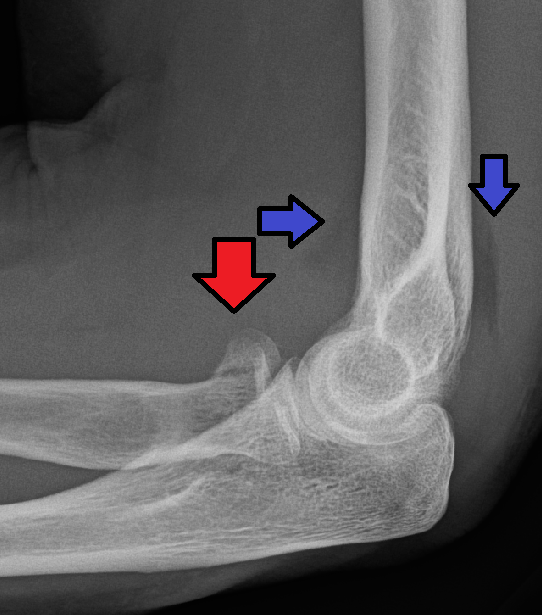
Injuries we commonly evaluate
Shoulder trauma includes clavicle, scapula, and proximal humerus fractures; acromioclavicular separations; dislocations; and acute tendon tears. Elbow trauma includes distal humerus, olecranon, radial head, and coronoid fractures as well as dislocation, ligament injury, and tendon rupture.
Initial evaluation
We assess the injury mechanism, skin, circulation, nerve function, swelling, alignment, and associated injuries. X-rays are commonly the first study. CT can define complex fracture anatomy, while MRI or ultrasound may be used for tendon or soft-tissue injury.
What imaging contributes
Multiple X-ray views show alignment and many fractures. CT is particularly useful when a fracture extends into the joint or has several fragments. MRI or ultrasound may be appropriate when a tendon, ligament, cartilage, or occult bone injury is suspected. Imaging is interpreted with the examination and the patient’s overall health.
Treatment principles
- Restore safe alignment and protect nerves and blood vessels
- Preserve or reconstruct the joint surface when possible
- Use a sling, brace, cast, fixation, or replacement based on the injury
- Begin motion at the right time to balance healing against stiffness
When surgery is needed
Surgery may be recommended for an open injury, unstable joint, displaced joint-surface fracture, threatened skin or circulation, irreparable tendon rupture, or an injury unlikely to maintain acceptable alignment. Fixation, ligament or tendon repair, reconstruction, and—occasionally—joint replacement are selected according to the injury.
Healing and rehabilitation
Bone and soft tissue need protection, but the shoulder and elbow are also prone to stiffness. Follow-up X-rays and examination guide when to begin motion, lifting, and strengthening. Recovery varies from weeks for a stable minor injury to many months after complex reconstruction.
Seek urgent care now
- Visible deformity or an open wound near the injury
- A cold, pale, blue, or pulseless hand
- New persistent numbness or inability to move the fingers
- Severe pain after a new injury or concern that the joint is dislocated
Evidence and further reading
- AAOS OrthoInfo: Shoulder Trauma—Fractures and Dislocations
- AAOS OrthoInfo: Distal Humerus Fractures
- AAOS OrthoInfo: Olecranon Fractures
Educational content is reviewed for patient clarity and is not a substitute for an examination or individualized medical advice.
PIA Shoulder MD