
Sports medicine
Throwing injuries
Evaluation and treatment for shoulder and elbow pain in overhead athletes.
Throwing places high rotational and traction forces across the shoulder and elbow. Symptoms can arise from workload changes, motion loss, mechanics, fatigue, labral or rotator cuff injury, ligament stress, or irritation of the growth plate in younger athletes. Treatment starts by identifying the entire kinetic-chain problem rather than focusing only on the painful spot.
See the anatomy and imaging
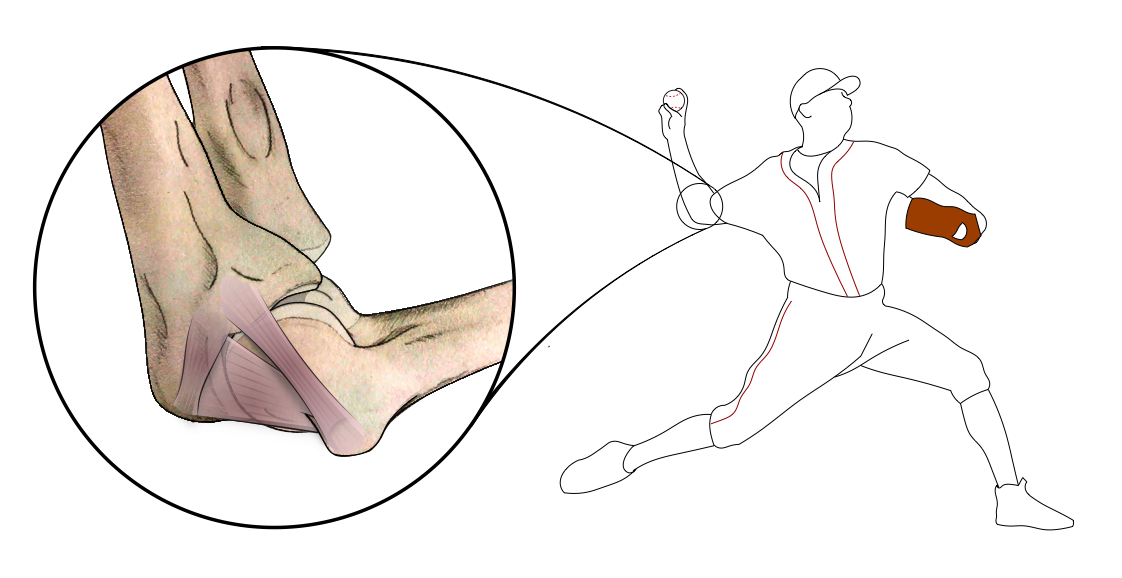
Why the shoulder and elbow are stressed
The throwing motion transfers force from the legs and trunk through the shoulder to the hand. During late cocking, the shoulder reaches high external rotation; during acceleration, the medial elbow resists substantial valgus load. Fatigue, workload spikes, motion loss, and inefficient mechanics can shift stress to vulnerable tissues.
What we assess
The visit includes throwing history, workload, position, recent velocity or training changes, prior injury, and symptoms. Examination includes shoulder rotation, strength, scapular control, elbow stability, and relevant trunk and lower-body mechanics.
Common diagnoses
- Rotator cuff or labral injury
- Internal impingement and motion loss
- Ulnar collateral ligament injury
- Valgus extension overload
- Little League shoulder or elbow in growing athletes
Imaging and diagnosis
X-rays evaluate bone, growth plates, alignment, and chronic stress changes. MRI may define the labrum, rotator cuff, UCL, or cartilage; ultrasound can dynamically assess selected tendons and the UCL. Imaging findings must match the location, phase of throwing, and examination because adaptive changes are common in experienced throwers.
Treatment strategy
- Reduce or pause painful throwing and correct the workload spike
- Restore shoulder rotation, scapular control, cuff strength, and kinetic-chain function
- Address pitching mechanics, recovery, and total seasonal volume
- Consider injections or surgery only for selected diagnoses after shared decision-making
Returning to throw
Most return plans begin with symptom control, restoration of motion and strength, correction of workload and mechanics, and then a staged throwing program. Pain should not be ignored or trained through, particularly in a growing athlete.
Young athletes
Pain around an open growth plate is a warning sign. Young athletes should stop painful throwing and be evaluated rather than relying on anti-inflammatory medication to continue. Age-appropriate pitch counts, rest days, seasonal breaks, and avoiding year-round single-sport overload are central to prevention.
Evidence and further reading
- AAOS OrthoInfo: Throwing Injuries in the Elbow
- AAOS OrthoInfo: SLAP Tears
- MLB/USA Baseball: Pitch Smart Guidelines
Educational content is reviewed for patient clarity and is not a substitute for an examination or individualized medical advice.
PIA Shoulder MD