
Reconstructive surgery
Shoulder replacement
Anatomic, reverse, and revision options tailored to the joint, rotator cuff, bone, and patient goals.
Shoulder replacement resurfaces or reconstructs the damaged ball-and-socket joint to reduce pain and restore useful function. The implant design is selected from the diagnosis, rotator cuff function, bone anatomy, prior surgery, and the demands placed on the arm.
Clinical atlas
See the anatomy and imaging
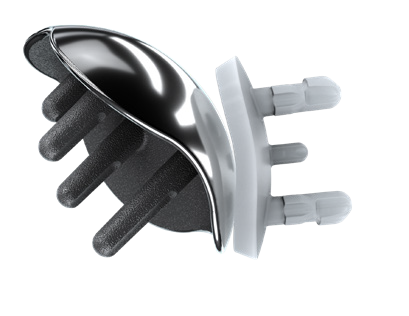
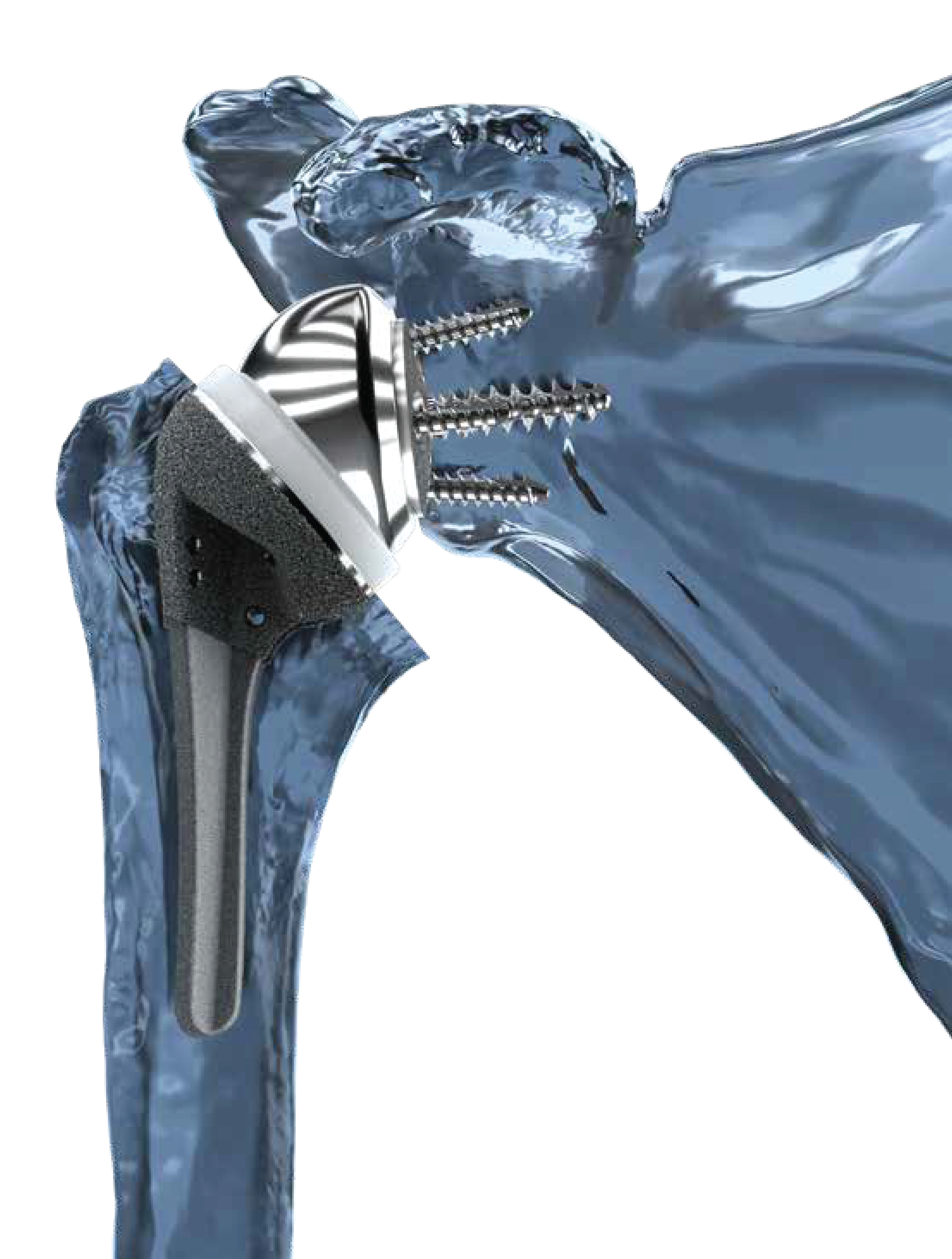
What the operation replaces
Shoulder arthroplasty removes damaged joint surfaces and replaces them with metal and high-grade plastic components. The surgeon restores alignment, balances the soft tissues, and protects or repairs key tendons. It is usually performed to relieve pain from advanced arthritis, cuff-tear arthropathy, selected fractures, or a failed prior reconstruction.
Anatomic replacement
An anatomic replacement recreates the native ball-and-socket relationship. It is commonly considered for arthritis when the rotator cuff is intact and functional and the bone can support the components.
Reverse replacement
A reverse replacement places the ball on the glenoid side and the socket on the humeral side. This allows the deltoid to contribute more effectively when the rotator cuff is deficient and can also address selected fractures, deformity, failed prior surgery, and revision problems.
How the choice is made
The diagnosis, cuff integrity, glenoid wear, bone quality, deformity, prior operations, nerve function, activity goals, and infection risk all matter. Standard X-rays are foundational; CT with three-dimensional planning may be used to assess glenoid version, bone loss, implant size, and component position.
Sling and the first 6 weeks
Wear the sling whenever you are up and about and while sleeping. Typical sling duration is about 2 weeks after a reverse replacement and about 4 weeks after an anatomic replacement; Dr. Ramirez will confirm your exact duration. For the first 6 weeks, do not actively lift the arm, reach behind your back, reach overhead or across your body, push up from a chair or bed, or lift more than a coffee cup.
Motion and rehabilitation timeline
Start the exercises taught before surgery on the day after surgery for 10–15 minutes, 3–4 times per day. During weeks 0–6, work on elbow, wrist and hand motion, scapular squeezes, permitted pendulums, and directed passive elevation to about 120° and external rotation to about 30°. Therapy usually begins around weeks 2–3; many patients can use a home program. Active shoulder motion begins as directed during weeks 6–12. Progressive strengthening begins during months 3–12. Most patients return to normal activity around 3 months and continue improving for a full year.
Wound care, sleep, and driving
Leave the bandage and gauze in place through day 4. Remove them on day 5; if the wound is dry, you may shower without scrubbing or soaking the incision. No baths, pools, hot tubs, lakes, or ocean for at least 4 weeks and until the incision is fully healed. Sleep propped up for the first 2–4 weeks and keep the sling on while sleeping. Drive only when you are off narcotic pain medicine, out of the sling, and feel safe; most patients resume around 2–3 weeks.
Expected goals
The primary goal is reliable pain relief with improved useful motion and function. Final motion is influenced by preoperative stiffness, cuff and deltoid function, bone, prior surgery, and rehabilitation. Heavy repetitive loading and high-impact use may shorten implant life, so long-term activity guidance is individualized.
Important risks
- Infection, bleeding, blood clot, or medical complication
- Nerve or blood-vessel injury
- Instability, stiffness, fracture, tendon failure, or persistent pain
- Implant loosening, wear, or need for future revision
Reviewed sources
Evidence and further reading
- AAOS OrthoInfo: Shoulder Joint Replacement
- AAOS OrthoInfo: Reverse Total Shoulder Replacement
- AAOS Clinical Practice Guideline: Glenohumeral Osteoarthritis
- Catalyst OrthoScience: Clinical Evidence
Educational content is reviewed for patient clarity and is not a substitute for an examination or individualized medical advice.
Experience and scholarship
Experience you can measure.
Specific surgical-volume totals will be added after they are confirmed against Dr. Ramirez’s operative records.
PIA Shoulder MD